
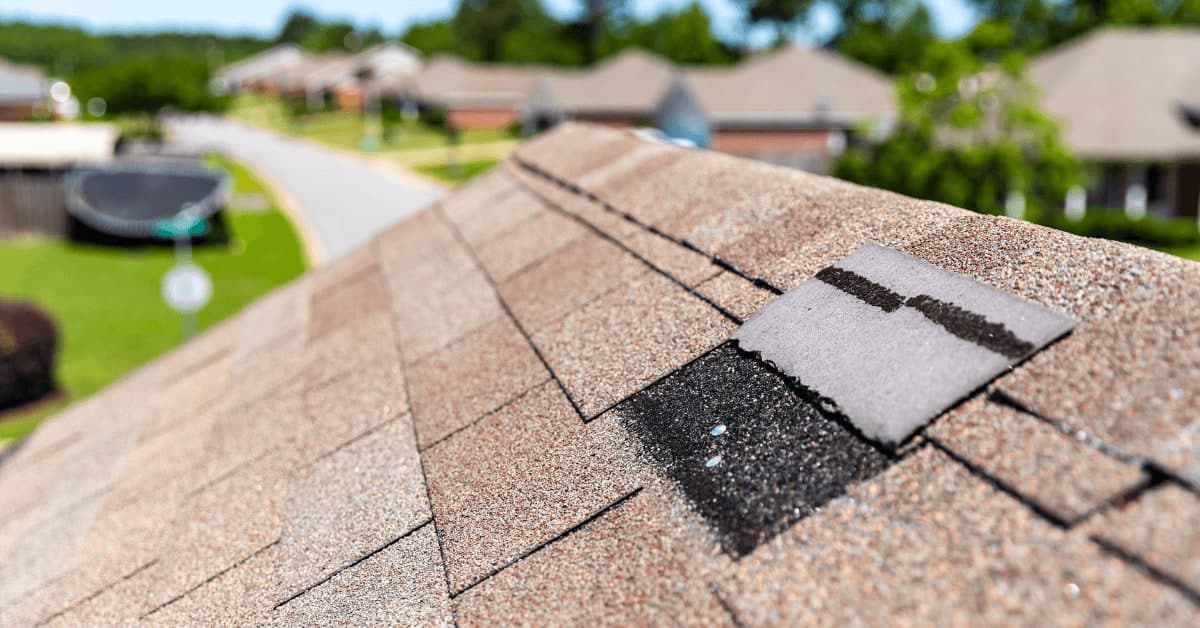
Hail Damage Assessment: Dented Shingles, Bruising & Granule Loss
Oklahoma hail can dent, bruise, and strip the life out of an asphalt shingle roof — often without a single visibly broken shingle. A thorough hail damage assessment looks for four things:
- Dented shingles: Hail impacts deform the shingle surface, leaving soft dents that hold water and accelerate weathering.
- Bruising: Impact crushes the asphalt mat beneath the granules. Press gently on a suspected spot — a bruised shingle feels soft or spongy, and the mat may crack when flexed.
- Granule loss: Hail knocks ceramic granules loose. Heavy granule buildup in gutters, downspouts, and at downspout splash areas is one of the most visible clues that a roof took a hit.
- Impact marks: Dark, round impact points where granules were knocked away, often in clusters that follow the storm's direction across the slope.
Granule loss is not just cosmetic. Granules shield the shingle from UV radiation and weather, and once the fiberglass mat is exposed, the shingle ages rapidly. What looks like "minor cosmetic damage" today can become a failing roof within a few seasons — which is why a documented assessment matters long before leaks appear.
Wind Damage: Lifted Shingles, Torn Shingles & Flashing
Oklahoma straight-line winds routinely exceed 60 mph, and severe storms can push well past 80 mph. Wind doesn't always remove shingles outright — often it damages the sealant strip first, leaving shingles vulnerable to the next storm. Common wind damage includes:
- Lifted or curled shingles: Raised edges where the factory sealant strip failed. Check for exposed nail heads and shingles that flap in the breeze.
- Torn or missing shingles: Shingles ripped loose at the nail line, sometimes taking decking fasteners with them.
- Flashing damage: Bent, lifted, or detached flashing around chimneys, valleys, skylights, and vent pipes — one of the most common hidden wind-damage points.
- Nail pops and pulled fasteners: Nails driven up through the shingle surface as wind lifts the material, creating entry points for water.
Flashing is especially important. It is the waterproof transition between roof planes and penetrations, and when wind lifts it even slightly, water follows. Because flashing damage often sits out of sight at valleys and roof edges, it needs to be checked by someone who knows exactly where to look.
Water Intrusion Signs After a Storm
Water damage is the storm's slow second act — it can show up days or weeks after the event. Watch for these signs inside and outside your home:
- Ceiling stains or discoloration: Brown or yellow rings, often appearing well after the storm has passed.
- Damp or matted attic insulation: Wet insulation loses its R-value and can stay damp for weeks, promoting mold.
- Water spots on interior walls: Especially near eaves, skylights, chimneys, and exterior corners.
- Musty odors or visible mold: A persistent musty smell in the attic or upper rooms often means hidden moisture.
- Peeling paint, bubbling drywall, or stained window frames: Classic markers that moisture is moving through wall and roof assemblies.
Water travels along framing and insulation, so the stain you see may be several feet from the actual entry point. That's why interior signs should always be traced back to a professional roof and exterior inspection — patching the stain without finding the entry point just postpones the problem.
What a Professional Storm Damage Inspection Covers
A complete storm damage assessment goes far beyond the shingles. Proof Construction (CIB #80004070) inspects the full exterior envelope of your home so nothing gets missed — and so your claim reflects the real scope of damage.
Roof
Shingle-by-shingle review of the field, hips, ridges, and valleys. Flashing, pipe boots, ridge vents, and chimney counter-flashing. Attic inspection for decking moisture, ventilation, and daylight penetration.
Learn MoreGutters & Downspouts
Dents and impact marks, separated seams, pulled fasteners, and sagging runs. Downspout blockages and granule buildup — the debris that tells the story of what the roof endured.
Learn MoreSiding & Trim
Cracked, dented, or missing siding panels, loose trim, and impact marks on the walls that faced the storm. Siding damage is frequently written into claims but just as frequently forgotten in scopes.
Learn MoreWindows & Doors
Cracked or shattered glass, failed seals and fogging, damaged screens, and water stains on frames and sills. Windows take a beating from hail and wind-borne debris.
Schedule InspectionAttic & Interior
Moisture readings on roof decking, insulation condition, and checks for daylight at ridge, hip, and valley intersections — the interior side of the storm story.
Use AI AnalyzerPhoto Documentation
Timestamped photos of every finding, organized so your adjuster can see the damage clearly. Clear documentation is the foundation of a fair claim.
Claim HelpWhen to Call Your Insurance Company
You should contact your insurance company when you have visible storm damage — especially when you believe it may exceed your deductible:
- You can see damage from the ground: Hail impact marks, granule loss, lifted or missing shingles, dented gutters, or cracked siding and windows.
- Water is entering your home: Stop the leak first with a temporary measure, document everything, then call your insurer.
- A recent storm event hit your area: Note the date — your policy's claim window starts from the storm, not from when you first notice damage.
- Your adjuster needs to inspect before repairs: Most policies require the carrier's adjuster to see the damage before work begins, so call early rather than after repairs are underway.
It costs nothing to ask questions. Your agent can tell you your deductible, your coverage type (replacement cost vs. actual cash value), and the deadline for filing after a storm. Get that information in writing — it protects you later.
Why Documentation Matters
Storm damage claims are won and lost on documentation. The more complete your evidence, the easier it is for your adjuster to write an accurate scope — and the harder it is for important damage to be overlooked. What to keep:
- Photos and video: Capture every damaged area from multiple angles, with something in frame for scale.
- Storm date and details: Note when the storm hit, what you observed, and any damage you saw immediately afterward.
- Estimates and receipts: Keep quotes from contractors and receipts for any emergency repairs or temporary measures.
- Written communication: Save emails, letters, and claim numbers from your insurance company.
A professional inspection report is the strongest piece of documentation you can have. As an Owens Corning Preferred contractor serving the Tulsa metro since 2016, Proof Construction documents damage thoroughly and stands behind every assessment with a 4.9-star rating from 100+ reviews and a 5-year workmanship warranty on work we perform.
Storm Damage Assessment FAQ
How can I tell if my roof has hail damage? +
Look for dented or bruised asphalt shingles, round impact marks where granules were knocked loose, exposed fiberglass mat, and granule loss collecting in gutters or downspouts. Hail damage is often hard to see from the ground, which is why a professional inspection matters.
What does wind damage look like on a roof? +
Common signs include lifted or curled shingle edges, torn or missing shingles, damaged or detached flashing around chimneys, valleys, and vents, and granules scattered around the yard or in gutters.
What are the signs of water intrusion after a storm? +
Watch for ceiling stains or discoloration, damp spots on interior walls, wet attic insulation, musty odors, and water marks near skylights, chimneys, or vent pipes. Water can travel along framing, so the source may be far from the stain you see.
Should I have my roof inspected before calling my insurance company? +
A professional inspection gives you documented evidence of damage before you file. Proof Construction has performed storm damage inspections across the Tulsa metro since 2016 and provides photo documentation you can submit with your claim.
What should I document before filing a storm damage claim? +
Photograph and video every area of visible damage, note the date of the storm, list every affected area such as roof, gutters, siding, and windows, keep receipts for any emergency repairs, and save all communication with your insurance company.
How soon after a storm should I get a roof inspection? +
As soon as you can safely do so. Small damage can worsen quickly, and fresh documentation is the most accurate. An early inspection also helps you meet your policy's deadlines for reporting damage.
Get a Professional Storm Damage Assessment
Serving Tulsa, Broken Arrow, and the surrounding metro since 2016. Owens Corning Preferred contractor • CIB #80004070 • 4.9-star rating with 100+ reviews • 5-year workmanship warranty • Financing available from $98/month for qualified homeowners with credit scores of 100+.