Attic Ventilation Systems We Install in Tulsa
Proof Construction designs and installs complete attic ventilation systems across the Tulsa metro — from simple soffit-and-ridge retrofits to solar-powered fan systems for homes where passive airflow isn't enough. We've been at it since 2016, and we're an Owens Corning Preferred Contractor with an A+ BBB rating and 4.9★ across 100+ reviews. Every installation starts with a free attic inspection that measures temperature, humidity, and your current vent capacity — because the right system for your home depends on its roof geometry, insulation level, and exposure.
Ridge Vent Installation
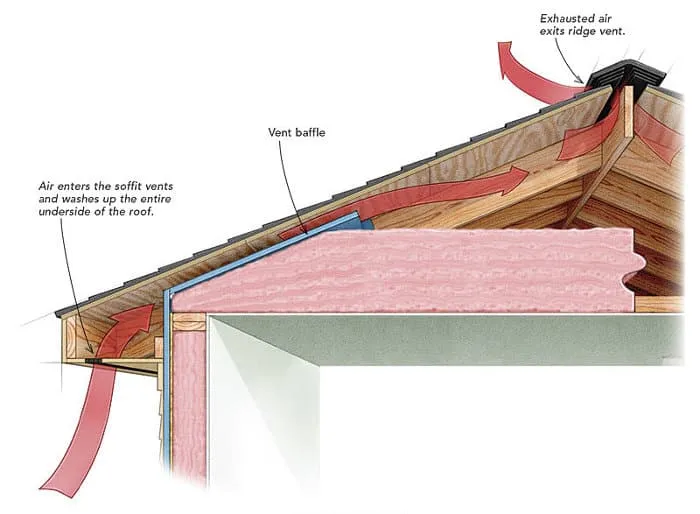
Ridge vents run the full length of the roof peak and let hot, humid air escape continuously at the highest point of the attic. Installed with a clean cut along the ridge and proper underlayment coverage, they're invisible from the street and work year-round with zero moving parts and zero electricity. We pair every ridge vent with matching intake so it actually moves air instead of just sitting there.
Soffit Vent Installation
Soffit vents are the intake half of the system — they pull fresh outside air in low, under the eaves, so it can sweep up through the attic and out the ridge. We install continuous aluminum soffit vent strips or round vent baffles, clear the rafter bays of insulation blockage, and install baffles so blown-in insulation never smothers the airflow. Without working intake, no exhaust vent on earth can ventilate your attic.
Box & Turtle Vent Installation
Box vents (also called turtle or static vents) are the workhorse exhaust option for roofs without a usable ridge line — hips, valleys, and low-slope sections. We size and space them per manufacturer specs, flash every curb watertight, and balance them against soffit intake so the attic breathes evenly. They're the most cost-effective way to add exhaust to an existing roof without touching the ridge.
Powered & Solar Attic Fans
When passive airflow can't keep up — cathedral ceilings, long roof runs, or heavily shaded soffits — a powered attic fan moves air on demand. We install thermostatically controlled electric fans and solar-powered attic fans that run free whenever the sun shines, pulling attic temperatures down 20–40 degrees on 100°F Tulsa afternoons. Every fan install includes the intake balance check most contractors skip.
Intake/Exhaust Balance Design
Ventilation is a system, not a collection of holes. The rule of thumb is 1 square foot of net free vent area per 150 square feet of attic floor, split roughly 50/50 between intake and exhaust. Too much exhaust with too little intake depressurizes the attic — and pulls air-conditioned air out of your living space through ceiling cracks. We measure your current net free area, then design the exact balance your attic needs.
Insulation & R-Value Interplay
Ventilation and insulation are two halves of one system. Ventilation removes heat and moisture from the attic air; insulation (R-30 to R-49 in Oklahoma) stops heat transfer between your living space and the attic. If we add vents without checking your insulation and air sealing, you can lose the conditioned air you paid for. Every Proof attic project includes an R-value assessment and sealing of bypasses around ducts, chimneys, and light fixtures.
Moisture & Condensation Prevention in Tulsa Attics
Tulsa's climate is a moisture machine. Summer humidity, spring storms, and winter freeze-thaw cycles load your attic with water vapor from showers, cooking, dryers, and HVAC ducts — and when that vapor hits cold roof sheathing in winter, it condenses into frost, then melts into rot. Poorly ventilated attics in our area show up as musty odors, mold on rafters, peeling exterior paint, and roof sheathing that fails years early. Balanced ventilation keeps attic air moving so moisture is flushed out before it can condense. We verify results with humidity readings before and after installation.
Ice Dam Prevention for Oklahoma Winters
Ice dams form when a warm attic melts snow on the roof and the water refreezes at the cold eaves — building a dam that backs water up under the shingles and into your walls. The fix isn't just a roof rake; it's keeping the attic at near-outdoor temperature. That takes three things working together: balanced ventilation to flush warm air out at the ridge, adequate insulation to keep house heat out of the attic, and air sealing to stop warm, humid air from leaking through ceiling penetrations. Proof Construction addresses all three so the dam never gets a chance to form.
Energy Savings: Cooler Attic, Lower Bills
An unventilated Tulsa attic can hit 150°F in July — turning your ceiling into a radiant heater and forcing your air conditioner to run longer and harder. By dropping attic temperature with proper ridge-and-soffit airflow or a solar fan, we cut the heat load your HVAC has to overcome. Homeowners typically see 10–20% summer cooling savings, plus reduced wear on the AC system itself. Because passive systems (ridge and soffit) run on wind and convection, they deliver that savings every single day with zero electricity — and solar fans capture the same savings for homes that need forced airflow.
Attic Ventilation Cost in Tulsa
Most Tulsa attic ventilation projects run $800–$4,500 installed, depending on the system and your roof:
- Soffit vents: $400–$1,200 for continuous aluminum strips or baffled round vents, including baffle installation where insulation blocks the bays
- Box / turtle vents: $150–$350 per vent installed, flashed and sealed
- Ridge vent: $1,500–$3,000 for an average Tulsa home, including the ridge cut, underlayment, and cap
- Powered attic fan: $400–$900 including thermostat, wiring, and balanced intake
- Solar attic fan: $500–$1,200 with no ongoing electricity cost
- Complete balanced system (soffit + ridge + baffles): $2,500–$4,500 — the option we recommend most
These are 2026 market estimates for the Tulsa metro, not quotes. Use our attic ventilation calculator for a fast estimate, then call (918) 734-4444 for a free, itemized quote.
Signs Your Attic Ventilation Is Failing
Ventilation problems hide until they cause damage. If you notice any of these on your Tulsa home, schedule a free attic inspection:
- Blistering heat — the attic is unbearable and the upstairs is the hottest room in the house
- Ice dams or icicles at the eaves after snow, even on well-insulated homes
- Frost or condensation on roof sheathing and trusses in winter
- Musty odors, mold, or mildew in the attic or on ceiling surfaces below
- Peeling exterior paint, especially near the eaves
- Warped or rotting roof sheathing discovered during a roof inspection
- No soffit vents at all — many Tulsa homes have exhaust-only ventilation, which is backwards
- Blocked vents — insulation, debris, or animal nests covering intake or exhaust openings
Roof damage from ventilation failure is often covered by homeowners insurance. See how insurance claims work if you're dealing with rot, mold, or storm damage.
Our Attic Ventilation Installation Process
- Free attic inspection: We measure temperature, humidity, insulation depth, and every existing vent's net free area — and photograph the whole attic.
- Balanced system design: You get a line-item plan showing exactly which vents go where, how much intake and exhaust you need, and what it costs.
- Professional installation: Ridge cuts are flashed correctly, soffit baffles are installed, and every vent is sealed against weather and pests.
- Insulation & air-seal check: We verify your R-value and seal bypasses so the new airflow works with your insulation, not against it.
- Verification & warranty: We re-measure airflow and humidity, clean up debris, and back the work with our 5-year workmanship warranty.
Attic Ventilation Service Areas — Tulsa Metro
Our attic ventilation crews cover the entire Tulsa metro, including:
Tulsa
Homes across the city — from midtown bungalows to south Tulsa new builds. Tulsa roofing →
Broken Arrow
Home base — serving BA neighborhoods with attic heat and moisture issues. Broken Arrow roofing →
Bixby
Ventilation retrofits for Bixby homes with cathedral ceilings and hot upstairs. Bixby roofing →
Jenks & Owasso
Balanced ridge-and-soffit systems for Jenks and Owasso family homes. Jenks roofing → · Owasso roofing →
Don't see your city? We serve the entire Tulsa metro — call (918) 734-4444 and we'll confirm same-day availability.
Hot Attic or Ice Dams? Call (918) 734-4444
Attic running hot? Ice dams at the eaves? Musty smell upstairs? Don't wait — trapped heat and moisture rot roof sheathing, feed mold, and drive up cooling bills all summer long.
- Free attic inspections — temperature, humidity, and vent-capacity readings included
- Balanced system design — intake and exhaust sized to your roof, not guessed
- All vent types — ridge, soffit, box/turtle, powered, and solar attic fans
- R-value & air-sealing checks — ventilation and insulation working together
- 5-year workmanship warranty — 5x the Oklahoma minimum, in writing
Attic Ventilation FAQ — Tulsa
Quick Answers
Attic ventilation cost: $800–$4,500 for most Tulsa installations, depending on system type and roof size.
Hot attic now? Call (918) 734-4444 — free attic inspection and same-week scheduling across the Tulsa metro.
Not sure what you need? Try our attic ventilation calculator →
Most Tulsa attic ventilation projects cost $800–$4,500 installed. Ridge vent installation runs $1,500–$3,000 for an average home, soffit vents run $400–$1,200, box or turtle vents run $150–$350 per vent, and powered attic fans run $400–$900 including wiring. A complete balanced intake/exhaust system with new soffit and ridge vents typically runs $2,500–$4,500. These are 2026 market estimates for the Tulsa metro, not quotes — Proof Construction provides free, itemized estimates.
Signs of poor attic ventilation include excessive attic heat in summer, ice dams forming at the eaves in winter, condensation or frost on roof sheathing, musty odors, peeling exterior paint, mold or mildew on rafters, and higher-than-expected cooling bills. If your attic feels like a sauna in July or your gutters grow icicles in January, your intake/exhaust balance is likely wrong. Proof Construction offers free attic inspections with temperature and moisture readings.
Intake vents (soffit vents, undereave vents) pull fresh outside air into the attic low near the eaves, while exhaust vents (ridge vents, box vents, powered fans) push hot, humid air out at the peak. Balanced ventilation requires roughly one square foot of net free area for every 150 square feet of attic floor, split evenly between intake and exhaust. Too much exhaust with too little intake actually depressurizes the attic and pulls conditioned air out of your living space.
Yes, when combined with proper intake. A solar-powered attic fan or a thermostatically controlled fan can drop attic temperatures by 20–40 degrees, which reduces the heat load on your HVAC system and can cut summer cooling costs by 10–20%. In Oklahoma's climate, balanced passive ventilation (ridge and soffit) often delivers most of the benefit at zero operating cost, which is why Proof Construction designs balanced systems first and adds powered fans only where passive airflow is insufficient.
Balanced attic ventilation is a key part of ice dam prevention. Ice dams form when warm attic air melts snow on the roof and the meltwater refreezes at the cold eaves. Keeping the attic near outdoor temperature with proper ridge-and-soffit airflow — combined with adequate insulation and air sealing — stops the melting cycle at its source. Proof Construction pairs ventilation upgrades with R-value checks so the two systems work together.