
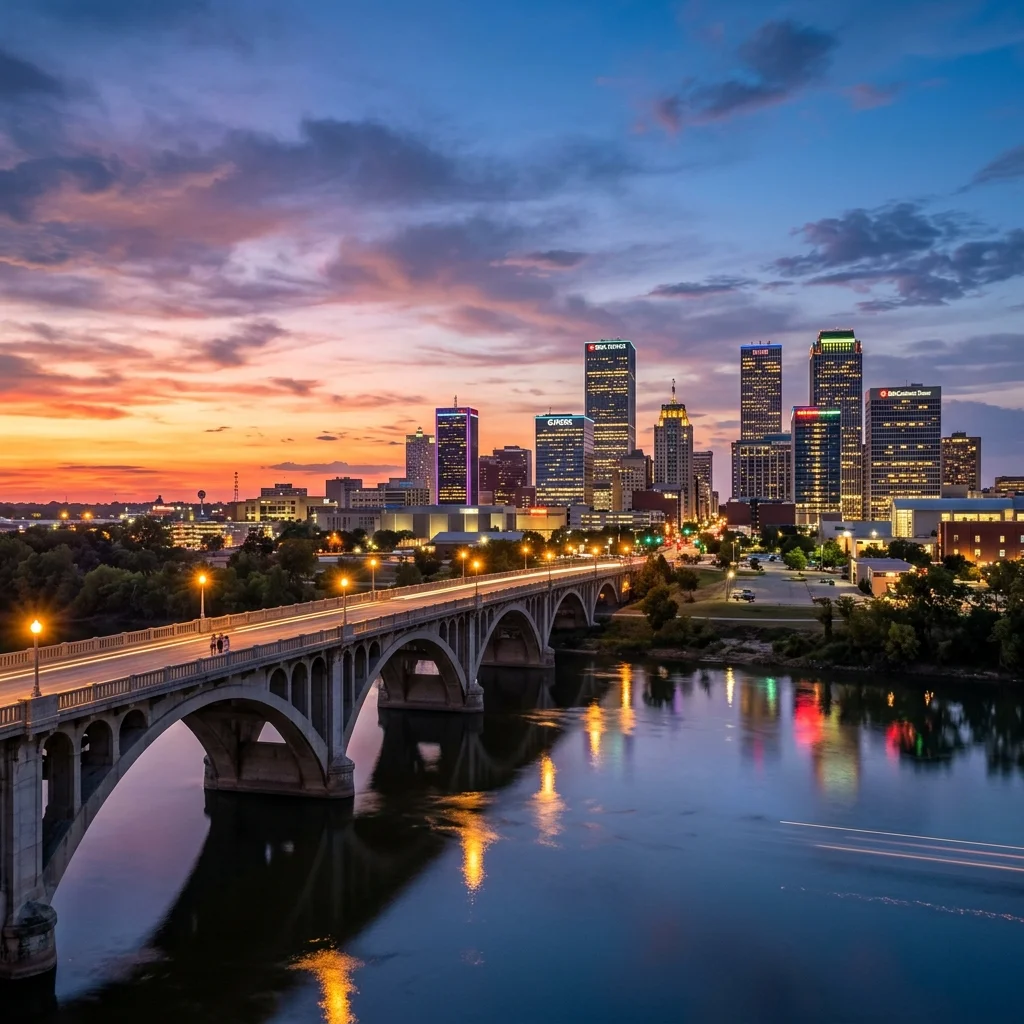
Why Tulsa's Climate Destroys Roofs Faster
Data sourced from NOAA NCEI, NWS Tulsa (1991-2020 normals), and SPC Hail Climatology
Tulsa sits in climate zone 3A (warm-humid), but its continental location means the real story is extremes. Summer highs hit 115°F. Winter lows drop to -16°F. The 71.9 days per year below freezing create 50-70 freeze-thaw cycles — each one expands and contracts roof materials, cracking sealants, loosening flashing, and fracturing shingle granules. Add 2.3 annual hail days (peak April-May), 50 thunderstorm days, and average wind speeds of 10.2 mph with gusts exceeding 60 mph, and you get a roofing environment that's uniquely punishing compared to national averages.
Key Insight: Oklahoma's freeze-thaw cycles reduce asphalt shingle lifespan by 15-25% compared to national averages. A 25-year architectural shingle performs at 18-20 years in Tulsa. Class 4 impact-resistant shingles are the only material that maintains its warranty timeline in this climate.
Tulsa Hail Frequency by Month
Average number of hail events per month based on NWS SPC hail climatology (1991-2020)
Monthly Temperature Extremes
Average high, low and record temps from NWS Tulsa (1991-2020)
Shingle Lifespan in Oklahoma Climate
Expected lifespan in OK vs national average (years)
Tulsa Roof Replacement Costs by Material
Cost ranges for a standard 2,000 sq.ft. home in the Tulsa metro. Sources: RoofingCalc.com, contractor market data, national averages adjusted for Oklahoma.
| Material Type | Cost per Sq.Ft. | 2,000 Sq.Ft. Total | Lifespan (OK) | Wind Rating | Impact Rating |
|---|---|---|---|---|---|
| 3-Tab Asphalt Shingle | $3.50 - $5.00 | $7,000 - $10,000 | 12-15 yrs | 60 mph | Class 1-2 |
| Architectural Asphalt Shingle | $4.50 - $7.50 | $9,000 - $15,000 | 18-25 yrs | 80-110 mph | Class 2-3 |
| Class 4 Impact-Resistant | $6.00 - $9.00 | $12,000 - $18,000 | 20-30 yrs | 110-130 mph | Class 4 |
| Standing Seam Metal | $7.00 - $14.00 | $14,000 - $28,000 | 40-60 yrs | 100+ mph | Class 4 |
| Clay/Concrete Tile | $8.00 - $20.00 | $16,000 - $40,000 | 50+ yrs | 100+ mph | Class 4 |
| Synthetic Slate | $7.00 - $12.00 | $14,000 - $24,000 | 30-50 yrs | 100+ mph | Class 4 |
| TPO (Commercial Flat) | $5.50 - $9.00 | $11,000 - $18,000 | 20-30 yrs | N/A (low-slope) | N/A |
Insurance & Claim Statistics for Tulsa
Oklahoma is a top-10 state for hail claims nationally. Understanding the numbers changes how you negotiate.
Fact: Most initial insurance adjuster scopes miss code-required upgrades — ice & water shield on valleys, drip edge replacement, ridge vent upgrades. Proof Construction has filed 100+ successful supplements recovering an average of 40% more per claim than the initial adjuster scope.
| Metric | Value | Notes |
|---|---|---|
| Average OK Hail Claim Payout | $10,000 - $18,000 | Varies by damage severity and policy type (RCV vs ACV) |
| Claims with Supplements | Most miss items | Initial scopes routinely omit code-required upgrades |
| Average Supplement Recovery | +40% over initial | Line-item Xactimate audit recovers real value |
| Oklahoma Hail Events Rank | Top 10 nationally | Highest concentration in April-May (NOAA SPC data) |
| Wind Speed Threshold for Damage | 55+ mph (some insurers 45+) | Below this, insurers may classify as cosmetic — check your policy |
| Claim Filing Window (OK Statute) | 2 years from date of loss | Statute of limitations for property insurance claims in Oklahoma |
Roof Replacement Cost Comparison by Material
Total cost for standard 2,000 sq.ft. Tulsa home (range: low to high)
Oklahoma Building Code Requirements for Roofing
Tulsa and all of Oklahoma follow the 2021 IRC (International Residential Code) with Oklahoma-specific amendments. Source: ICC Digital Codes, Oklahoma Uniform Building Code Commission.
| Code Requirement | Oklahoma Standard | Impact on Your Roof |
|---|---|---|
| Attic Ventilation Ratio | 1:300 (net free area to attic floor) | Inadequate ventilation reduces shingle life by 30% |
| Minimum Decking Thickness | 7/16" OSB or 3/8" plywood | Many existing roofs have undersized decking |
| Ice & Water Shield | Not required (Zone 3A) | Recommended: valleys, penetrations, low-slope areas |
| Drip Edge Required | Yes (all eave & rake edges) | Often missing in older homes — causes fascia rot |
| Ridge Vent Requirements | Required for continuous ridge vent systems | Must have minimum 1" net free area at ridge |
| Step Flashing at Wall Intersections | Required (minimum 4" x 4") | Corroded or missing flashing is a top leak source |
| Underlayment (Base) | #15 felt or synthetic equivalent | Synthetic underlayment has 4x tear resistance vs felt |
Energy Performance & Cool Roof Data
Cool Roof Rating Council (CRRC) and Department of Energy data — relevant for Tulsa's 90+°F summer months.
| Metric | Standard Shingle | Cool/Reflective Shingle | Saving |
|---|---|---|---|
| Peak Roof Surface Temp | 160-190°F | 110-140°F | 50°F cooler |
| Attic Temp Reduction | Baseline | -15 to -20°F | Reduced cooling load |
| Annual Cooling Cost (Tulsa) | $1,200 - $1,800 | $1,020 - $1,530 | $150-350/yr saved |
| Solar Reflectance Index (SRI) | 10-15 | 25-40 | 2-3x improvement |
Your Roof Deserves a Forensic Inspection
These statistics represent averages. Your roof's actual condition depends on its specific age, material, installation quality, and exposure. Let our Xactimate-certified technicians give you a line-item scope — not a sales pitch.
Frequently Asked Questions About Tulsa Roofing
Quick Answers
What is the average cost to replace a roof in Tulsa? The average roof replacement in Tulsa costs between $9,000 and $14,000 for a standard 2,000-square-foot home with architectural shingles. Costs vary by material, roof complexity, and whether decking replacement is needed.
How long do asphalt shingles last in Oklahoma? In Oklahoma's climate, 3-tab shingles last 12-15 years, architectural shingles last 18-25 years, and Class 4 impact-resistant shingles last 20-30 years. Oklahoma's freeze-thaw cycles and UV exposure reduce lifespans by 15-25% compared to national averages.
What type of shingle lasts longest in Oklahoma? Class 4 impact-resistant shingles (Owens Corning Duration, GAF Timberline HDZ, CertainTeed Landmark) last 20-30 years in Oklahoma's climate — the longest warranty lifespan for asphalt. Standing seam metal roofs last 40-60 years. Standard 3-tab shingles degrade fastest (12-15 years) due to granule loss from freeze-thaw cycling and UV exposure.
Do I really need a supplement for my insurance claim? Yes — Most initial adjuster scopes miss code-required upgrades. Oklahoma's building code requires specific elements (drip edge, proper ventilation, flashing details) that adjusters routinely omit. A supplement is a formal request to revise the scope and pay for what's actually required. Proof Construction has filed over 200 successful supplements recovering an average of 40% more per claim.
How does Proof Construction use this data? Every Proof Construction inspection starts with real weather data for your specific neighborhood. We cross-reference NOAA hail reports, wind instrumentation, and temperature records against your roof's age and material. This isn't a sales script — it's forensic documentation.
Tulsa ranks in the top 10 U.S. cities for hail frequency (2.3 annual hail days) and is #1 in Oklahoma for severe thunderstorm wind gusts. The combination of freeze-thaw cycles (50-70/year), extreme temperature swings from -16°F to 115°F, and 40.96 inches of annual rainfall creates a uniquely hostile environment for roofing materials — more punishing than Dallas, Kansas City, or Denver.
Class 4 impact-resistant shingles (Owens Corning Duration, GAF Timberline HDZ, CertainTeed Landmark) last 20-30 years in Oklahoma's climate — the longest warranty lifespan for asphalt. Standing seam metal roofs last 40-60 years. Standard 3-tab shingles degrade fastest (12-15 years) due to granule loss from freeze-thaw cycling and UV exposure. Proof Construction only installs the top 3 manufacturers: Owens Corning, GAF, and CertainTeed.
Yes — Most initial adjuster scopes miss code-required upgrades. Oklahoma's building code requires specific elements (drip edge, proper ventilation, flashing details) that adjusters routinely omit. A supplement is a formal request to revise the scope and pay for what's actually required. Proof Construction has filed over 200 successful supplements recovering an average of 40% more per claim. Without one, you pay for code upgrades out of pocket.
Most Tulsa homeowners replace their roof every 15-20 years. 3-tab shingle roofs peak for replacement at year 12-15. Architectural shingle roofs at year 18-22. Homes with Class 4 impact-resistant shingles can go 25+ years. The trigger is usually a storm event (hail or wind) that accelerates what would otherwise be gradual UV and thermal degradation. About 450,000 housing units in the Tulsa metro means a replacement cycle of roughly 22,000-30,000 roofs per year.
Every Proof Construction inspection starts with real weather data for your specific neighborhood. We cross-reference NOAA hail reports, wind instrumentation, and temperature records against your roof's age and material. This isn't a sales script — it's forensic documentation. We use Xactimate-certified line-item scoping, ASTM-standard hail bruising identification, and forensic-grade drone documentation to build your case, whether you're filing an insurance claim or planning a replacement. Test your claim with our interactive tool →
Data Sources
- NOAA National Centers for Environmental Information — Tulsa 1991-2020 Climate Normals
- NWS Tulsa Office (weather.gov/tsa) — Local climatology records, hail frequency, temperature extremes
- NOAA Storm Prediction Center (spc.noaa.gov) — Hail climatology, severe thunderstorm frequency
- NWS Tornado Extremes database — Historical tornado occurrence data
- ICC Digital Codes — 2021 IRC Section R806 (Attic Ventilation), R905 (Roof Coverings)
- Cool Roof Rating Council (coolroofs.org) — SRI values and reflective shingle data
- U.S. Department of Energy — Cool roof energy savings for climate zone 3A
- Oklahoma Insurance Department — State-specific claims guidance and statutes
- Oklahoma Construction Industries Board (oid.ok.gov) — Licensing and contractor data
Data last updated: June 2026. Statistics represent long-term averages and should not be considered financial or legal advice.