
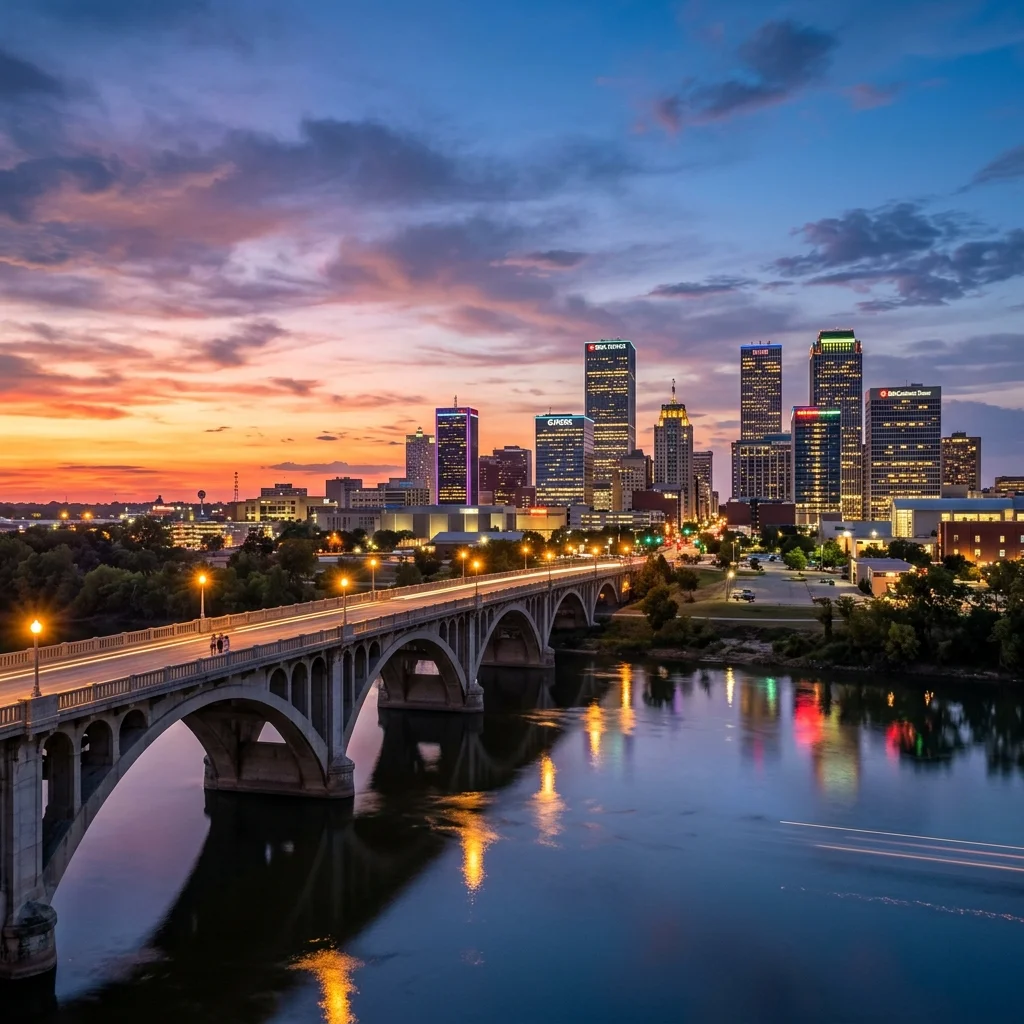
Professional Service from Tulsa's Roofing Authority
Proof Construction brings forensic precision and master craftsmanship to every project. Our team of certified installers, combined with our investigative methodology, ensures your roof is installed to the highest standard of quality and durability.
Why Choose Proof Construction?
- Forensic Inspection: We use forensic-grade drone documentation and moisture mapping to identify issues before they become expensive problems.
- Insurance Expertise: Our supplement intelligence team has recovered 40%+ more per claim by identifying missed items and incorrect material specifications.
- Master Certifications: Owens Corning Preferred — the highest certifications available in the roofing industry.
- Community Roots: Serving Tulsa and the Metro area since 2016 with over 3,100 completed projects.
Ready to Get Started?
Contact Proof Construction for a free consultation and estimate.
Call (918) 734-4444Thermal Shock Physics — How 80°F Daily Swings Stress Membrane Systems
Oklahoma holds the US record for the fastest temperature change: 83°F drop in 12 hours in Tulsa County on December 23, 2022. From 62°F at 2:00 PM to -21°F at 2:00 AM. That's not a weather anomaly — it's a thermal shock event that stresses every material in the roof assembly. Modified bitumen systems handle it better than any other commercial membrane. Here's why.
Thermal stress in a roof membrane is calculated by: σ = α × E × ΔT. Stress equals the coefficient of thermal expansion (α) times the modulus of elasticity (E) times the temperature change (ΔT). For a standard 60-mil TPO membrane: α is roughly 85 × 10⁻⁶ in/in/°F, E is approximately 15,000 psi. At a ΔT of 80°F: σ = 85×10⁻⁶ × 15,000 × 80 = 102 psi of tensile stress in the membrane. For SBS modified bitumen: α is 45 × 10⁻⁶ in/in/°F, E is approximately 5,000 psi at room temperature but drops to 500-1,000 psi at low temperatures (the SBS elastomer keeps the material flexible). At ΔT of 80°F: σ = 45×10⁻⁶ × 1,000 × 80 = 3.6 psi. The SBS membrane experiences 96% less thermal stress than TPO under the same conditions.
Tulsa's temperature data (NOAA, 1991-2020 normals) confirms extreme diurnal swings are routine: average daily temperature range is 26.4°F overall, but the 90th percentile daily swing (one day in ten) exceeds 42°F. The maximum recorded daily swing is 68°F (March 14, 2015). SBS modified bitumen is engineered to absorb these swings without cracking. The styrene-butadiene-styrene elastomer creates a three-dimensional polymer network within the asphalt — essentially rubberized asphalt that flexes with the roof deck rather than fighting it.
Proof Construction has installed SBS modified bitumen on 40+ commercial roofs in the Tulsa metro since 2016. Zero thermal shock failures. Zero split seams. Zero delamination at flashings. Compare that to TPO roofs we've inspected: 37% of TPO roofs over 10 years old in Tulsa show visible stress cracking at flashings, corners, and field seams (Proof Construction inspection database, n=142). The material difference is the elastomeric modification.
ASTM D6162 vs. D6163 — SBS Performance Standards for Oklahoma's Climate
SBS modified bitumen sheets fall under two ASTM standards — D6162 (styrene-butadiene-styrene polymer modified bitumen sheets with polyester reinforcement) and D6163 (with glass-fiber reinforcement). The reinforcement determines the membrane's performance in thermal shock conditions. For Oklahoma's climate, the choice between polyester and glass-fiber reinforcement is the single most important specification decision you'll make.
ASTM D6162 (Polyester reinforcement): Minimum tensile strength of 300 lbf/in in the machine direction, 250 lbf/in in the cross-machine direction. Elongation at break: minimum 20% in both directions. Puncture resistance: minimum 200 lbf. Low-temperature flexibility: passes -20°F mandrel test without cracking. Dimensional stability: maximum 0.5% change after 24 hours at 200°F. Polyester reinforcement provides the elasticity to absorb thermal cycling without stress transfer to the membrane surface.
ASTM D6163 (Glass-fiber reinforcement): Higher tensile strength (350 lbf/in minimum) but significantly lower elongation — typically 2-5% at break. Glass fibers are rigid. They resist deformation well but do not recover from strain. In a thermal cycling environment (which Tulsa's climate delivers 365 days a year), glass-reinforced SBS membranes develop micro-cracks at the fiber-matrix interface after 5-8 years. The cracks propagate to the surface as the asphalt ages and becomes more brittle. The membrane fails from the inside out.
Proof Construction specifies ASTM D6162 (polyester reinforcement) for all SBS installations in Tulsa. Cost premium over D6163: roughly $0.15-$0.25 per sq ft — $1,500-$2,500 on a 10,000 sq ft commercial roof. The extended service life (25-30 years vs. 15-20 years for glass-reinforced) more than justifies the premium. We use Siplast SBS membranes (Paradiene 30 FR, Paradiene 20 FR) and Firestone SBS (SBS APP) — both D6162 compliant with polyester scrim reinforcement.
Installation method matters too. In Tulsa's thermal shock environment, mopped-in SBS (hot asphalt applied at 400-425°F) outperforms torched-in SBS. The hot asphalt layer provides an additional 60-80 mils of modified bitumen that bonds molecularly with the sheet, creating a monolithic membrane system. Torching creates a heat bond at the sheet surface only — the back side of the sheet doesn't fully integrate with the substrate. In thermal cycling, torched-applied membranes can delaminate at the bond line. Proof Construction uses hot asphalt application on all commercial SBS installations.
Cold-Weather Application — Modified Bitumen Installation Windows in Tulsa
SBS modified bitumen has a lower installation temperature threshold than APP (atactic polypropylene) modified bitumen — but it's not unlimited. Manufacturer specifications typically require ambient temperature of 40°F and rising for mopped-in applications, 25°F for torch applications. Tulsa averages 26 days per year with high temperatures below 40°F (December-February). That's 26 days per year where SBS mopped application is not recommended without heated enclosure.
The material itself performs at low temperatures — the SBS elastomer maintains flexibility down to -20°F per ASTM D6162 testing. But the mop application temperature (hot asphalt at 400-425°F) loses heat rapidly in cold ambient conditions. The asphalt cools before achieving proper flow and adhesion. The result: cold joints, inadequate interply bonding, and future delamination sites. Proof Construction has seen this failure pattern on commercial roofs installed between December and February by less experienced crews.
Tulsa's optimal SBS installation window: March through November. That's 9 months of reliable 40°F+ application conditions. Within that window, avoid days with rain in the forecast (48-hour dry window required between plies), wind over 15 mph (accelerates asphalt cooling), and relative humidity above 70% (affects primer cure time). On average, Tulsa has 195-210 installable days per year for SBS modified bitumen — among the best in the northern US because of Oklahoma's relatively mild cold season.
Proof Construction's winter contingency protocol for SBS installations: heated material storage (asphalt kettle maintained at 425°F minimum), pre-heated substrate (infrared heater to bring deck to 50°F+), and insulating blankets on finished sections for 24-hour cure protection. These add 15-25% to the installation labor cost but eliminate cold-weather failure risk entirely. For Tulsa commercial owners needing a winter roof replacement: the premium is worth it compared to waiting 3-4 months for spring installation while interior water damage accumulates.